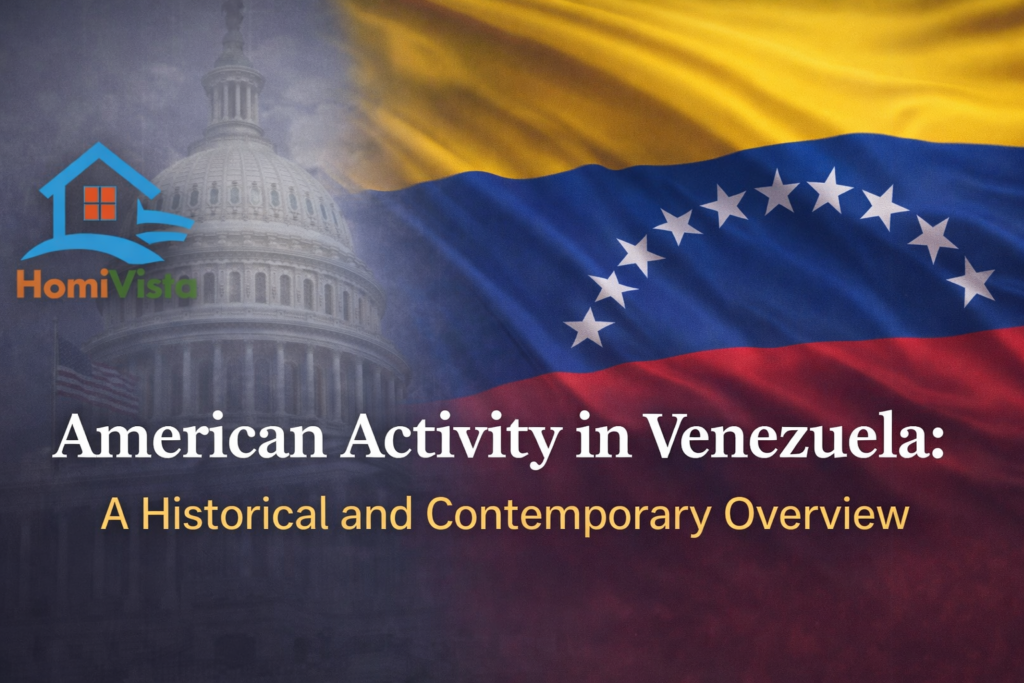
The relationship between the United States and Venezuela has long been complex, shaped by geopolitics, oil interests, ideological differences, and regional influence. American activity in Venezuela has evolved over decades, ranging from economic engagement and diplomatic relations to sanctions, political pressure, and humanitarian involvement. This blog explores the background, key developments, and current implications of U.S. actions in Venezuela.
Historical Background
Venezuela and the United States shared relatively stable relations during much of the 20th century. Venezuela was one of the largest oil suppliers to the U.S., and American oil companies played a major role in developing Venezuela’s petroleum industry. During this period, the U.S. supported Venezuela’s democratic governments and maintained strong economic ties.
The relationship began to shift in the late 1990s with the rise of Hugo Chávez, whose socialist ideology and anti-imperialist stance directly challenged U.S. influence in Latin America. Chávez pursued policies of nationalization, reduced the role of American corporations, and aligned Venezuela with countries critical of U.S. foreign policy.
Political Involvement and Diplomatic Tensions
American activity in Venezuela has often been framed around promoting democracy and human rights. The U.S. government has repeatedly expressed concerns about electoral fairness, freedom of speech, and political repression under Venezuelan leadership—first under Hugo Chávez and later under Nicolás Maduro.
Diplomatic relations deteriorated sharply after the controversial Venezuelan elections and political unrest. The U.S. recognized opposition leaders at various points, supported international pressure through organizations like the Organization of American States (OAS), and worked with regional allies to isolate the Maduro government diplomatically.
Economic Sanctions and Their Impact
One of the most significant forms of American activity in Venezuela has been the use of economic sanctions. These sanctions targeted Venezuelan government officials, state-owned oil company PDVSA, and financial institutions. The stated aim was to pressure the government to restore democratic processes.
However, sanctions have been highly controversial. Critics argue they have worsened Venezuela’s economic crisis, contributing to shortages of food, medicine, and basic services. Supporters claim sanctions are necessary to limit corruption, restrict authoritarian power, and push for political reform.
Oil, Energy, and Strategic Interests
Venezuela possesses the world’s largest proven oil reserves, making energy a central factor in U.S. interest. American activity has often reflected strategic calculations about energy security, global oil markets, and the influence of rival powers such as Russia and China in Venezuela.
In recent years, limited engagement and selective easing of restrictions have occurred in response to global energy demands, showing that U.S. policy toward Venezuela continues to balance political principles with practical economic considerations.
Humanitarian Assistance and Migration
The U.S. has also played a role in addressing Venezuela’s humanitarian crisis. Millions of Venezuelans have migrated to neighboring countries and beyond, creating one of the largest displacement crises in the world. American activity includes funding humanitarian aid, supporting refugee assistance programs, and coordinating with international agencies.
At the same time, migration policies and border controls have become part of the broader debate on how the U.S. responds to Venezuelan instability.
Conclusion
American activity in Venezuela reflects a broader struggle between ideology, economic interests, regional influence, and humanitarian concerns. While the U.S. positions its actions as support for democracy and human rights, the outcomes remain deeply debated. The future of U.S.–Venezuela relations will depend on political developments within Venezuela, regional diplomacy, and shifting global priorities.
Understanding this relationship is essential for grasping the broader dynamics of Latin American politics and international relations in the 21st century.